- +(86) 514-87520588
- norah@gsopower.com
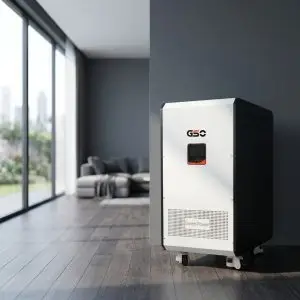
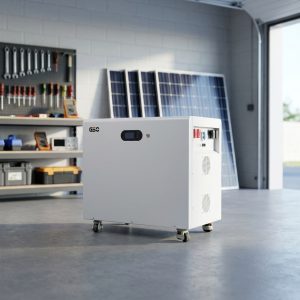
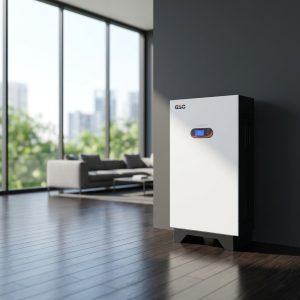
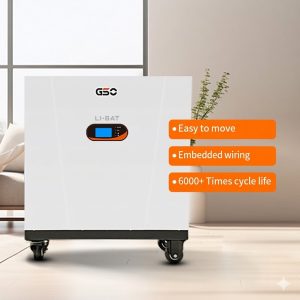
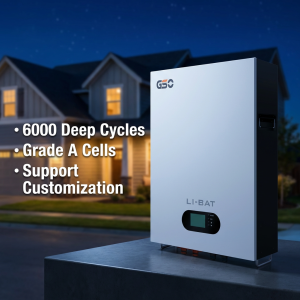
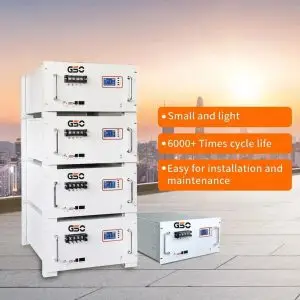
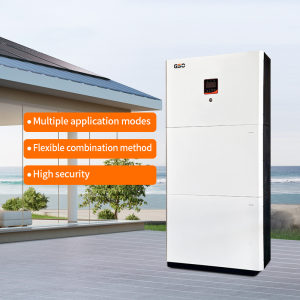
Built with premium lithium iron phosphate cells rated for 6,000+ cycles at 80% DoD — over 16 years of daily use before reaching rated cycle count. Cell consistency is verified across every pack for predictable, even degradation.
Every GSO battery ships with a pre-loaded inverter protocol library. Select your inverter brand on the built-in LCD screen at commissioning — no RS485 tools, no dial codes, no callbacks. Compatible with Growatt, Deye, Victron, Voltronic, Sofar, Goodwe, and all major brands.
All GSO battery series support parallel expansion with automatic addressing. Add units without reconfiguring existing ones — scale from 2.56kWh to 256kWh+ within the same product family.
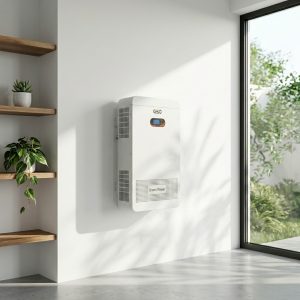
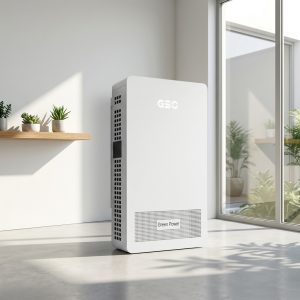
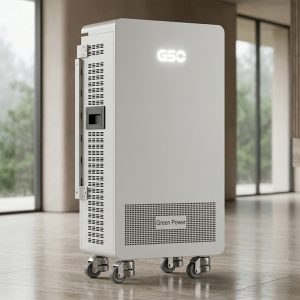
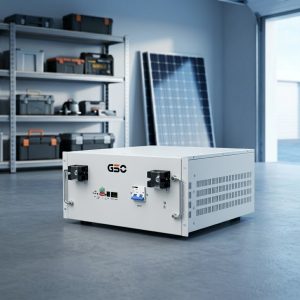
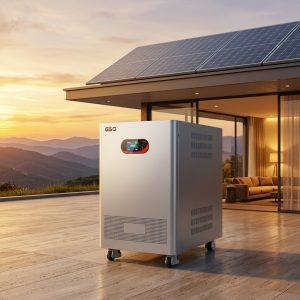
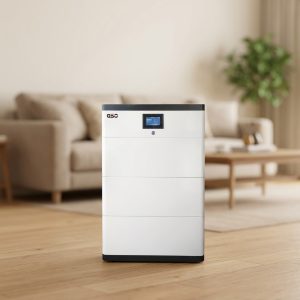
Wall-mounted, wheeled, or stacked — choose the installation format that fits the site without changing the battery chemistry, communication protocol, or warranty terms.
A solar battery storage system stores the electricity generated by your solar panels and releases it when you need it — during the evening, overnight, or when the grid goes down. Without storage, surplus solar generation is sold back to the grid at low feed-in rates. With a battery system, that energy stays in your home or business and is used when it has the highest value.
A complete solar battery storage system typically consists of a solar array, a hybrid inverter, and a battery bank. GSO’s LiFePO4 battery range covers all three formats — wall-mounted for space-saving residential installs, wheeled cabinets for flexible deployment, and all-in-one units with the inverter already integrated.
Step 1 — Connect your solar panels Solar panels feed DC power into your hybrid inverter’s MPPT input. The inverter tracks maximum power point in real time, capturing as much generation as possible.
Step 2 — Charge your battery Surplus solar generation — power your panels produce beyond what your loads need right now — flows into the battery. You set the charging priority: solar only, solar first, grid first, or hybrid. The system follows your setting automatically.
Step 3 — Use stored power when you need it In the evening, during outages, or during peak-tariff hours, the battery discharges through the inverter to power your home or business. Switching between grid and battery happens in under 10ms — fast enough that your appliances don’t notice.
Step 4 — Monitor and adjust remotely GSO batteries connect to your hybrid inverter’s APP or cloud platform. Check battery state, energy flow, and fault status from your phone. Adjust charging schedules remotely to optimise for your local electricity tariff.
Battery storage, or a Battery Energy Storage System (BESS), is a technology that captures energy from renewable sources like solar (PV) or the utility grid and stores it in a chemical form for later use. In modern systems, like the GSL-Easy Stack Series, this involves an integrated unit containing lithium batteries, a hybrid inverter, and an intelligent management system. These systems allow users to switch between multiple operating modes, such as PV priority, load priority, or grid-tie priority, to ensure power is available during outages or high-demand periods.
While specific pricing is customized based on project scale, the cost is primarily driven by capacity (kWh) and system integration. Investing in high-performance LiFePO4 (Lithium Iron Phosphate) systems is highly cost-effective due to:
Longevity: Systems designed for 10+ years of service with 5,000 to 6,000+ charge cycles.
Reduced Installation Costs: Modular “plug-and-play” designs (like the GSO Series) reduce on-site labor and assembly time.
Operational Savings: Features like peak shaving and valley filling allow the system to charge during low-cost off-peak hours and discharge during expensive peak hours, directly reducing electricity bills.
To calculate your requirements, you must determine your daily energy consumption in kWh and your desired autonomy (how long you want to run on battery alone). You can calculate individual module energy using the formula:
Nominal Voltage (V) x Nominal Capacity (Ah) = Total Energy (Wh)
Example: A standard GBP48-100 module (48V x 100Ah) provides 4.8kWh.
Scalability: For larger needs, systems like the GLV1 Series allow up to 8 clusters inparallel, reaching capacities over 30k Wh. Industrial cabinets can scale much higher,offering capacities from 15kWh up to 200 + kWh
Yes, particularly for users seeking energy independence and financial returns. Key benefits include:
High Efficiency: System conversion efficiency is typically ≥90%, ensuring minimal energy loss during the storage process.
Safety & Reliability: Modern units utilize Smart BMS (Battery Management Systems) with over-charge, over-discharge, and short-circuit protection.
Seamless Backup: With switching times as low as 10ms, the transition from grid to battery is unnoticeable, protecting sensitive electronics.
Environmental Impact: These systems use non-polluting materials free of heavy metals.
The “best” system depends on your specific installation environment:
For Space-Saving,Recommended Series:GBP-W (Power Wall),Key Advantage:Slim, wall-mounted design that minimizes footprint.
For All-in-One,Recommended Series:GSL-Easy Stack,Key Advantage:Integrated inverter and battery for easy “plug-and-play” setup.
For Scalable/Flexible,Recommended Series:GLV1 Series (Stackable),Key Advantage:Allows you to add modules as your energy needs grow.
For Portable/Flexible,Recommended Series:GBP-L (Wheel Type),Key Advantage:Equipped with a wheeled chassis for easy on-site movement.
While 1000mAh (1Ah) cells are typically used for small-scale applications like solar garden lights or portable electronics, professional Solar Battery Storage
Systems for homes and industry utilize high-capacity 3.2V LiFePO4 cells as their building blocks.
Cell Integration: These 3.2V cells are connected in series (e.g., 16S1P) to create the 51.2V modules used in residential storage.
Standard Capacities: Professional grade storage starts at 100Ah to 314Ah per cell to provide the energy density required for whole-home backup

+(86) 18021324160
WhatsApp us